

Fleet telematics for truck and trailer management has become an essential tool in the transportation industry. It collects real-time data — tire pressure, temperature, fuel level, location, and driving behaviour — and turns it into actionable insight.
Moreover, combined with fleet management software, it enables proactive decisions that protect both goods and drivers. Predictive analytics now allow fleets to anticipate maintenance, manage energy, and reduce costs before issues arise.
How Does Fleet Telematics Work?
A Telematics box collects vehicle and GPS data continuously. It gathers information across several key areas:
- Tracking & routing — real-time location and optimal driving routes
- Driver data — identification, mileage, fuel consumption, and harsh driving events
- Vehicle health — maintenance alerts, DTC fault codes, and usage rates
- Cargo monitoring — reefer temperature for cold chain logistics
- Tire pressure — live pressure values for each axle
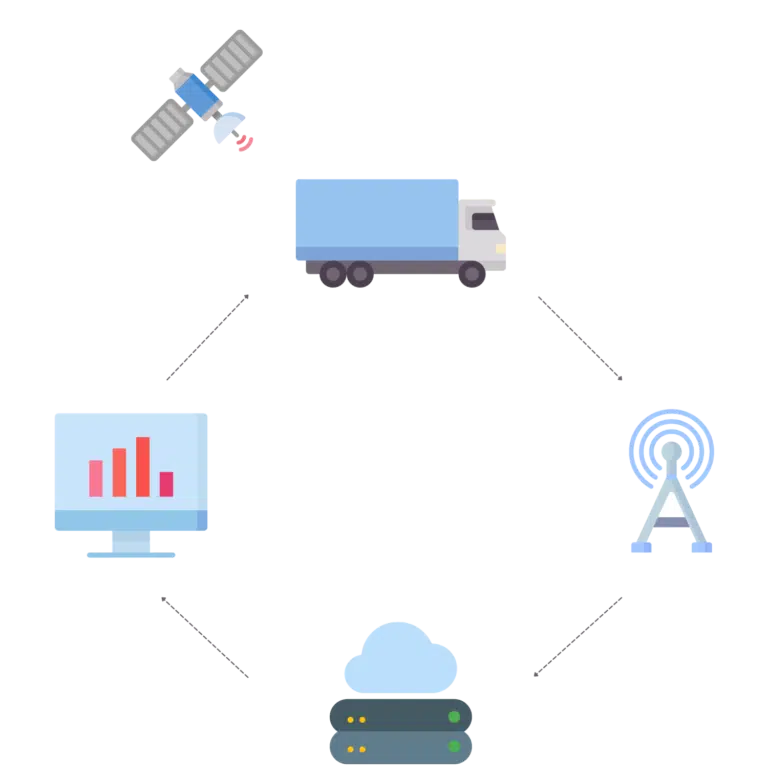
Data travels via cellular network to a central cloud server. There, fleet managers can analyse it, generate weekly reports, and act on what matters most.
From Basic Tracking to Predictive Maintenance
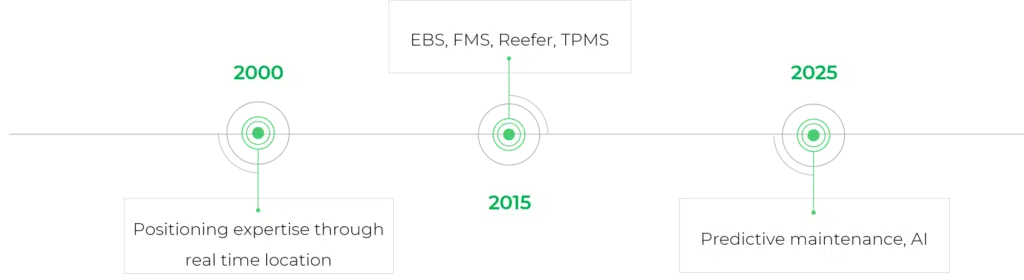
Early telematics systems focused on positioning. Today, fleet telematics for truck and trailer management goes far beyond asset tracking. It anticipates failures, schedules maintenance automatically, and reduces unplanned downtime — before a breakdown happens.
Key Benefits of Fleet Telematics
Increased Productivity
Telematics and GPS together monitor vehicle and trailer location in real time. By analysing route data, fleet managers identify the most efficient and safest paths for drivers. Consequently, delivery times drop and fuel consumption falls.
Furthermore, geofencing allows managers to track shipments and benchmark driver performance against delivery schedules — with a direct positive impact on customer satisfaction.
Reduced Fuel and Operational Expenses
Fuel is one of the largest costs in fleet operations. According to Automotive Fleet, it can represent up to 60% of a company’s operating budget. Therefore, any reduction in fuel waste delivers significant savings.
Telematics enables smarter route planning and real-time idle time tracking. As a result, fleets can identify drivers who need coaching and cut unnecessary fuel use quickly and measurably.
Proactive Vehicle Maintenance
Telematics reports vehicle maintenance issues remotely, via real-time alerts. By monitoring engine diagnostics, hours of service, and vibration data, the system schedules preventative maintenance before problems escalate.
This approach reduces unplanned downtime and extends equipment life. Moreover, the automotive predictive maintenance market reflects this shift — it is expected to grow at a CAGR of approximately 28% from 2019 to 2027.
Improved Driver Safety
Driver safety is a key concern across the trucking industry. Fleet telematics collects behaviour data and generates safety scores for each driver. As a result, fleet managers can organise targeted coaching sessions and address risky habits early.
Additional safety benefits include:
- Risk analysis — combining driving behaviour with accident data, medical history, and contraventions
- Dangerous intersection identification — using aggregated accident data
- Insurance optimisation — providing accurate safety data to insurers to lower premiums
Conclusion: Fleet Telematics as a Strategic Asset
Fleet telematics for truck and trailer management delivers a clear return on investment. It optimises routing, cuts fuel costs, reduces maintenance expenses, and improves customer service — all from a single platform.
As telematics evolves, several emerging trends are shaping the next generation of solutions:
- Machine Learning and Artificial Intelligence
- Video telematics
- 5G connectivity
LID Technologies is at the forefront of these developments. Learn more about our telematics solutions.